Five prompt styles that give stylised results
Realism is only one flavour. These five style directions, with example prompts, help you land toy-like, painterly, chunky and other stylised looks on purpose.
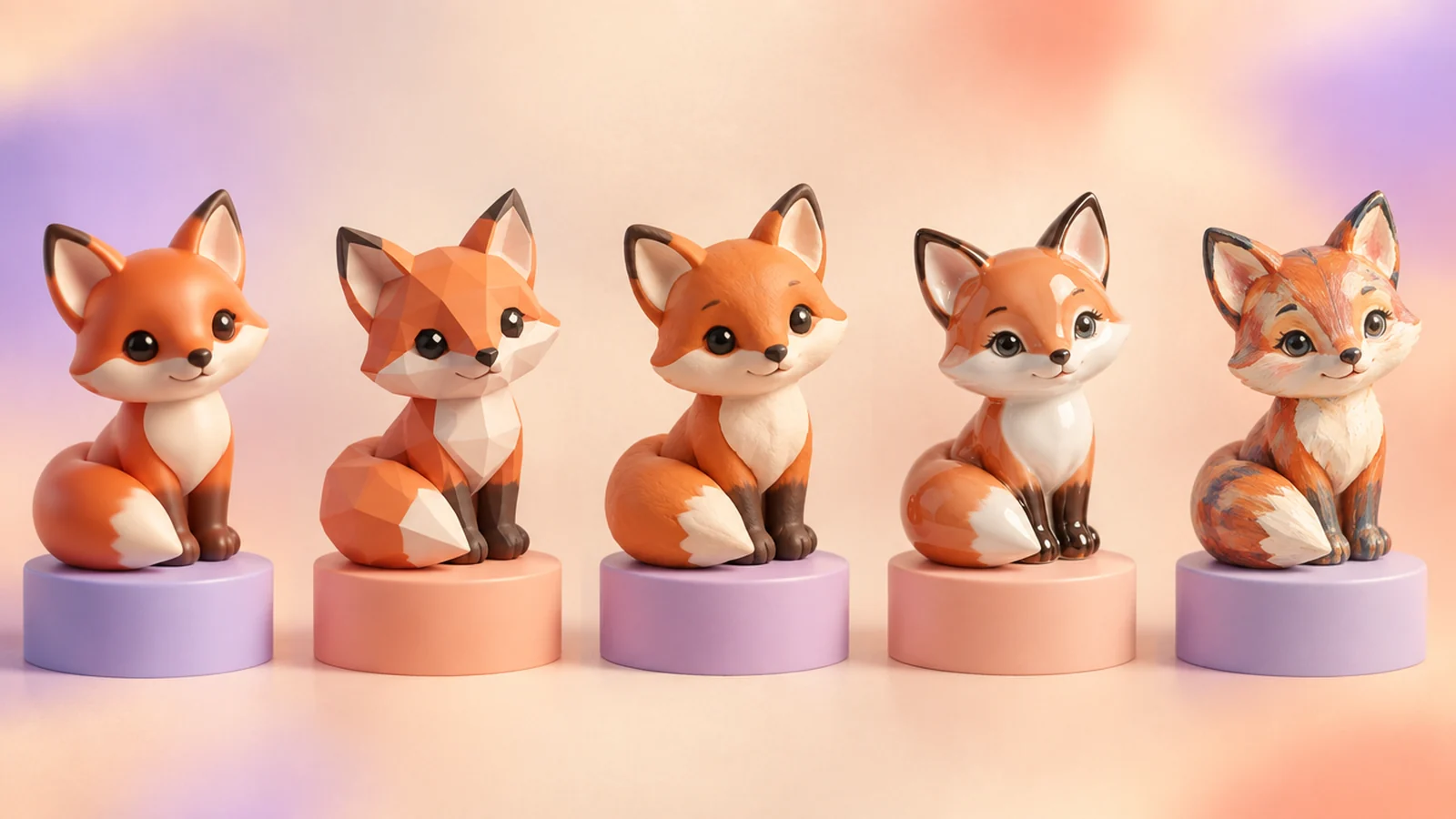
Stylised models are often more memorable than realistic ones. They read clearly at a distance, they age well and they fit games, animation and collectibles beautifully. The trick is to choose a style on purpose and describe it with words the generator understands. Here are five directions we keep coming back to.
1. Toy-like
Think vinyl figures and designer toys: smooth surfaces, rounded forms and oversized heads.
A small knight with a big round helmet and a tiny sword, smooth vinyl toy style, soft rounded shapes.
Key words: vinyl toy, rounded, chibi proportions, smooth. Works best for: mascots, collectibles, cute creatures like a fantasy fox or a French bulldog.
2. Hand-painted
The look of classic fantasy games: chunky forms with colour and light painted straight into the texture.
A treasure chest with iron bands and a curved lid, hand-painted texture, warm colours, stylised game asset.
Key words: hand-painted, stylised game asset, bold colours. Works best for: props, buildings and environment pieces.
3. Chunky low-detail
Bold, simplified shapes with big bevels, perfect for mobile games and readable silhouettes.
A stone golem with blocky limbs and a mossy back, chunky stylised shapes, simple forms.
Key words: chunky, blocky, simplified, bold silhouette. Works best for: creatures and characters seen from far away.
4. Porcelain and ceramic
Glossy, delicate and slightly uncanny. Great for dolls, busts and decorative objects.
A princess doll with painted cheeks and a lace dress, glazed porcelain, delicate details.
Key words: porcelain, glazed ceramic, painted details. Works best for: portraits, dolls and display pieces.
5. Spooky cartoon
Exaggerated proportions with a playful, eerie twist, somewhere between a storybook and a haunted house.
A ghostly chef with a tall floppy hat and a ladle, translucent body, spooky cartoon style.
Key words: spooky cartoon, exaggerated, whimsical, translucent. Works best for: characters for games, animation and seasonal content.
Tips that apply to every style
- Pick one style, not three. "Toy-like hand-painted realistic" pulls the model in different directions.
- Put the style last. Describe the object and its form first, then add the style words at the end.
- Test shape first. Generate without texture while you explore; add a texture once the silhouette feels right.
- Keep a style library. When a phrase works, save it and reuse it across a whole set for consistency.
Mix with care
Once you are comfortable, try blending two compatible styles: toy-like plus spooky cartoon makes wonderful seasonal characters. Change one word at a time and keep the seed fixed so you can see exactly what each word does.
Pick a style, write three prompts and compare. Your signature look might be one adjective away.