Busts and portraits: getting faces right
Faces are where viewers look first and forgive least. Here is how to prompt and reference busts and head studies that feel alive instead of uncanny.
We are wired to read faces. A slightly off elbow goes unnoticed, but a slightly off eye makes the whole model feel wrong. The good news: busts and portraits are one of the most satisfying things you can make in Polyvia once you know what to ask for.
Choose bust or full figure deliberately
When the face matters most, make a bust. A head-and-shoulders model spends all of its detail where attention goes. A full figure spreads the same detail over hands, boots and armour, and the face gets less of it. Great portrait pieces, like a Medusa bust or a head study, are cropped for exactly this reason.
Describe the face with structure, not adjectives
"Beautiful" and "handsome" carry very little information. Describe structure instead:
- Shape: "oval face, high cheekbones, strong jaw".
- Features: "large almond eyes, small nose, full lips".
- Expression: "calm, faint smile" or "fierce, brows lowered". One expression, clearly stated.
- Age and character: "weathered older sailor" says more than a list of wrinkles.
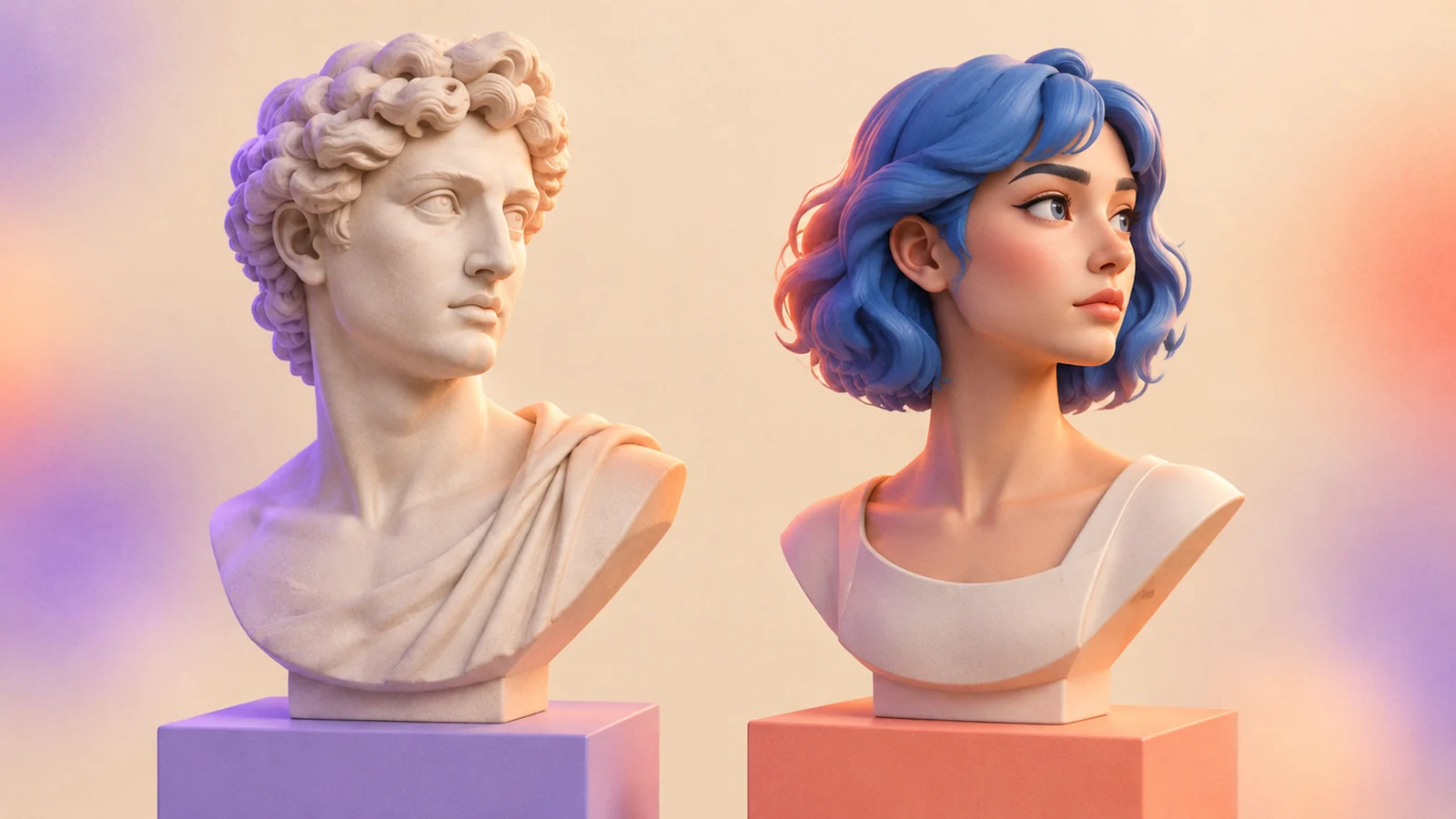
A bust of a young woman with an oval face, high cheekbones, calm expression and short wavy blue hair, stylised realistic.
Using a reference image
For image-to-3D, the reference makes or breaks the result:
- Front-facing and evenly lit. Hard shadows can turn into dents.
- Neutral background. Let the face be the only subject.
- Hair clearly separated from the face. Stray strands across the eyes confuse the shape.
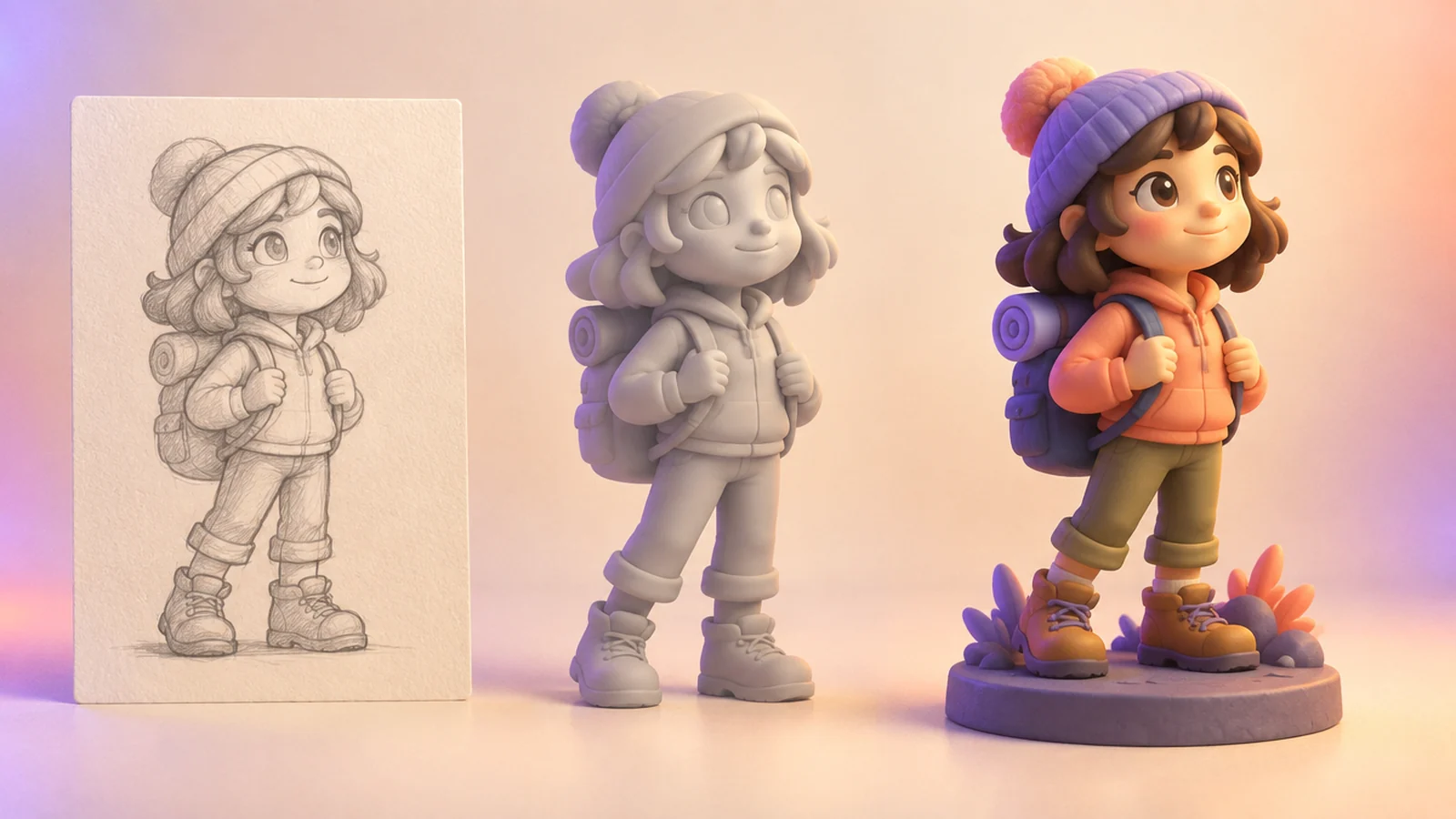
- Stylised art works too. A clean character drawing often gives a friendlier result than a photo.
Hair, crowns and headwear
Hair is sculpted as a mass, not strands. Describe its overall shape: "short bob", "long braid over the shoulder", "tight curls". Crowns, helmets and snakes (hello, Medusa) should be described with count and placement: "a crown of seven snakes rising from the head".
Textures bring faces to life
A face with PBR texturing picks up subtle skin roughness and glossy eyes that catch the light. For stylised portraits, a standard texture with painted colours is often enough. Either way, preview under a soft key light from above and to one side; flat front lighting hides the form you worked so hard for.
Common fixes
| Problem | Try this |
|---|---|
| Eyes look blank | Mention "detailed eyes with irises" and add a texture |
| Face feels generic | Add age, character or a distinctive feature |
| Hair merges with the face | Describe the hairline and parting |
| Expression is muddled | Pick one emotion and state it plainly |
Show them off
Busts make stunning renders, lovely AR pieces as USDZ and beautiful prints as STL. Put one on a simple plinth, light it well and you have a portfolio piece.
Start with someone you know well, a favourite character or a friend's likeness, and see how close you can get.